What I wanted from the place I moved to
I moved to a hill region of Okayama Prefecture where deer, boar and other animals outnumber the people.
When I looked for a property I had five main conditions. One: liveable without renovation. Two: farmland continuous with the house. Three: not fronting onto a road. Four: not marked as a hazard zone on the local risk maps. Five: connected to mains water and sewerage.
As is common with rural property, almost everything cheap needs work. You also cannot take out a mortgage on a cheap old farmhouse. And land you have no use for often comes attached to the deal.
So when buying an old house you have to balance the ideal against compromise. I do not think you will find a property meeting every condition, whether you go through a municipal vacant-house register or a local agent.
What actually happened
The sewer line reached to about fifty metres from the house I bought, but the toilet was still a pit type. Everything else met my conditions, so I settled on it.
There were about two months before the move, and I had it converted to flush plumbing during that window. That work cost roughly another million yen.
Look at the ceiling during a viewing
When you view a property, I strongly recommend checking the ceiling. You do not need to climb into the roof space; just look up from inside the room.
A distinct, large, round patch of discolouration may mean there was a wasp nest — the honey drips through and stains the ceiling. A wide, softly spreading stain, on the other hand, is very likely the mark of a leaking roof.
At the time I assumed every old farmhouse had discolouration somewhere. Once I was living there, though, the spots where I heard dripping on rainy days matched the spots where the ceiling had changed colour exactly.
I am the sort of person who fixates on noise, so the sound of the leak became a source of stress and I called in contractors several times. That came to nearly half a million yen in total, and the leak still is not fixed. I have decided not to use that contractor again.
A buried water pipe had come apart
Not long after the move, a water leak happened too. The tap I used every day suddenly weakened, so I assumed it was leaking somewhere and called someone straight away.
The inspection found that a buried PVC pipe had come apart. I assume the cause was simply age.
Things like this happen often with a cheap old house. Which is to say: the spending does not stop once you have moved in.
The real subject: clearing land in year one
That was a long preamble. What I actually meant to write about was a photo that surfaced while I was looking back through old pictures, from the time in my first year when I was working hardest.
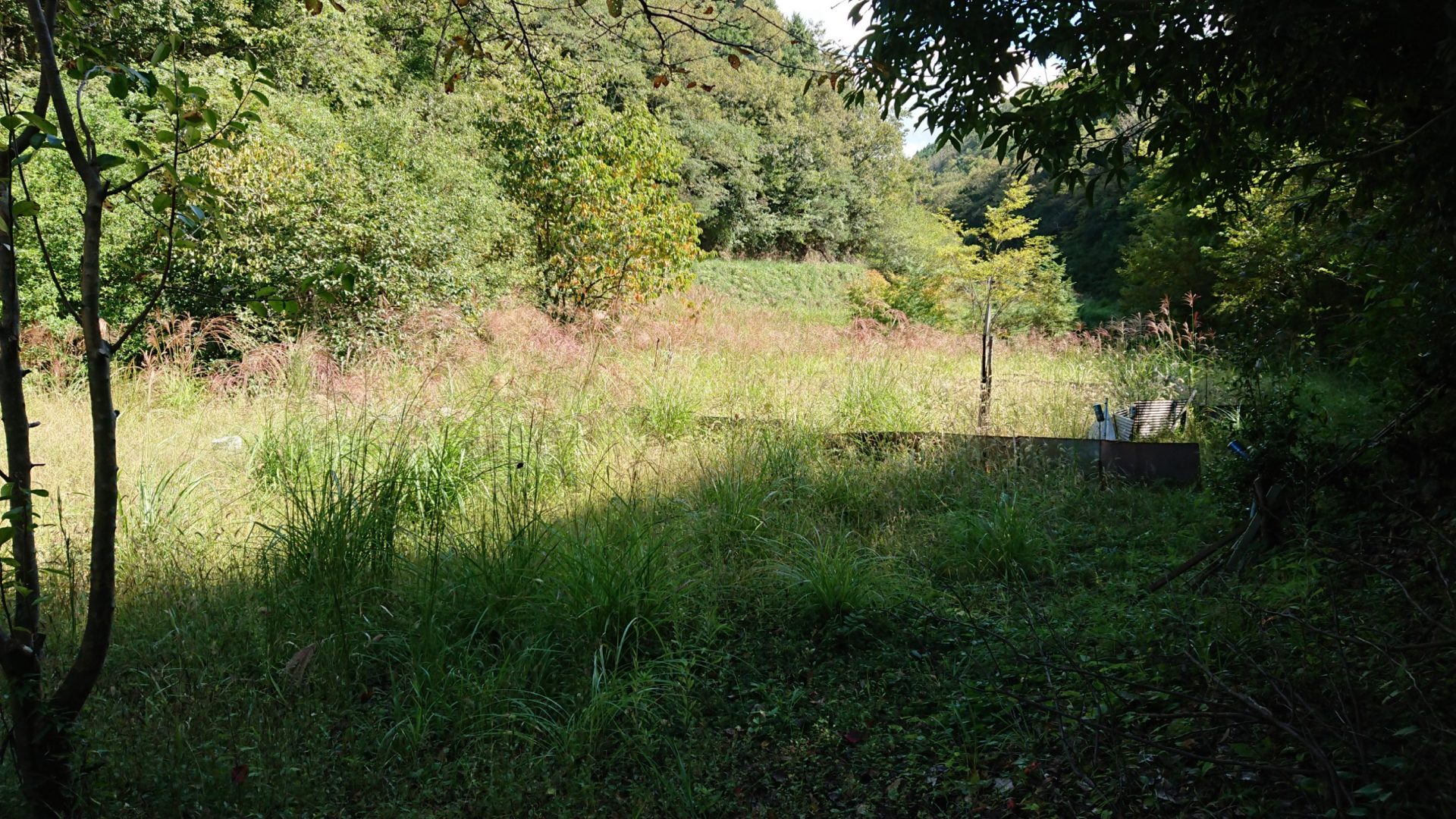
Land nobody uses goes wild in a single year. To make an abandoned field usable again, there is nothing for it but to grit your teeth and clear it. Here is a photo from soon after I moved.
Starting by getting used to the brush cutter
It is routine for me now, but back then I had barely used a brush cutter. Before I could clear that plot, I had to learn to handle one.
The first machine I bought was a Makita. A very easy model to use. Even so, at first the blade frightened me, and I remember working with my back held away from it. After about ten minutes, though, I started to settle.
I think it was around October. Where the grass grows thick there are snakes, and wasp nests. I was afraid to push forward, so I made a rule of cutting clean around my feet and advancing one step at a time.
A brush cutter is loud and blocks out the sounds around you. That meant everything in my field of vision startled me — a leaf or a butterfly moving was enough to make me flinch. For that reason the work took a very long time. On day one the mental fatigue outweighed the physical.
It is fine to be bad at first
With anything, I think it is fine to start out bad at it.
In your first year the excitement of a new environment is large, so you can take on anything with a positive frame of mind. You understand almost nothing and you fail often, feeling your way — but that is the period when even the failures are enjoyable. So the first year is, I feel, an easy time to try a lot of things.
A few years on it stops working like that. Getting used to something is the same as adapting to it, but the more efficient you become, the easier it is to cut corners.
Grass cutting is the classic example. At first you take your time and do it carefully. But in the rainy season it grows back in about a month. As long as you can still think "time to cut the grass again," you are fine — but that gradually turns into "it will only grow back anyway." If you are planning to move out here, watch for it.
Looking back at those photos
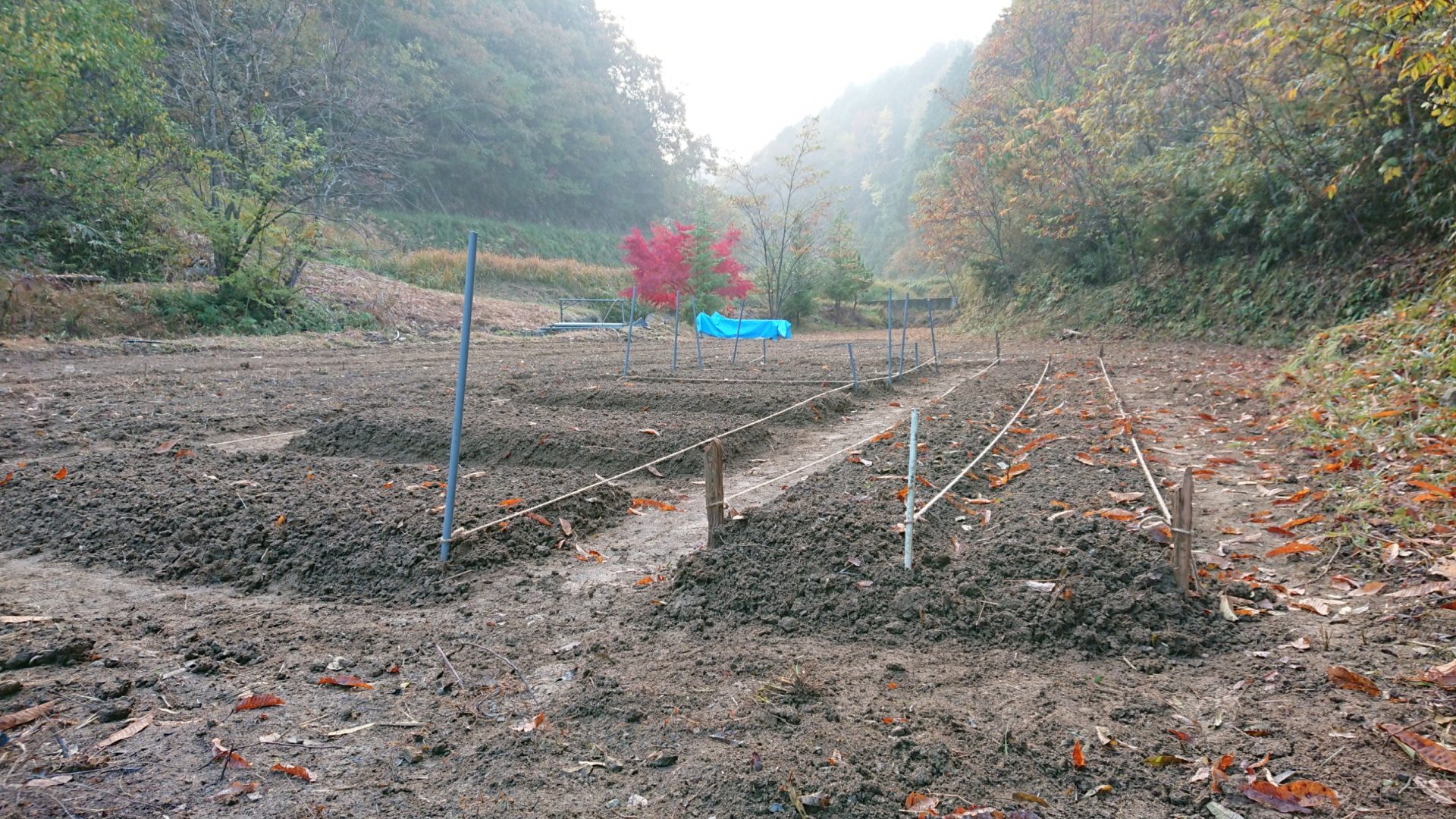
In the first year I think it took about two months to go from clearing to a finished field. I worked in small pushes with rests in between, which added to the time.
Looking at those photos, I was surprised at how neatly the field had been laid out. These days the grass around it just stays where it is. Compared with now, I clearly worked far more carefully in year one.